What a Policy Really Covers
Homeowners insurance covers your house, your belongings, your liability, and your living expenses after a covered loss. That’s the short answer. The honest answer is that what your policy actually pays depends on two things: the policy form you have (usually an HO-3 or HO-2) and the endorsements added to it.
Two neighbors can hold policies from the same company and walk away with very different claim checks after the same storm. One added water backup coverage and insured her jewelry for its full appraised value. The other kept the base policy. Neither choice is wrong, but only one of them knew what she was choosing.
This guide walks through the standard coverage parts, explains what an HO-3 policy is, compares it to an HO-2, and shows how endorsements change the picture.
The Six Coverage Parts
A standard homeowners policy bundles six coverages into one contract. The Insurance Information Institute groups them into four essential protections: your structure, your belongings, your liability, and your additional living expenses.
Coverage A: Dwelling
Coverage A pays to repair or rebuild your home after a covered loss. This includes attached structures, built-in appliances, and systems like plumbing and electrical. Your Coverage A limit should reflect the cost to rebuild your home, not its market value or purchase price.
Coverage B: Other Structures
Coverage B protects detached structures like a garage, shed, or fence. It’s generally set at about 10% of your dwelling coverage. If your home is insured for $400,000, your detached structures carry about $40,000 in protection.
Coverage C: Personal Property
Coverage C covers your belongings: furniture, clothing, electronics, and everything else you’d take with you in a move. It’s generally 50 to 70% of your dwelling coverage, and it follows your things anywhere in the world, including a storage unit or your kid’s dorm room.
One catch worth knowing: high-value items like jewelry, furs, and silverware carry small dollar sublimits, especially for theft. If you own anything appraised, it probably needs its own endorsement. More on that below.
Coverage D: Loss of Use
Coverage D pays your extra living costs while your home is repaired after a covered loss. Hotel bills, restaurant meals, even boarding for a pet. Many policies set this at about 20% of your dwelling coverage. It only covers costs above what you’d normally spend, so your regular grocery bill stays yours.
Coverage E: Liability
Coverage E protects you when you’re legally responsible for someone else’s injury or property damage that may respond. Limits generally start at about $100,000, though many households carry $300,000 to $500,000.
Coverage F: Medical Payments
Coverage F helps pay for expenses related to minor injuries that occur on your property, whether you’re responsible or not (no fault). We’ll cover this one in detail below since it’s one of the most misunderstood parts of the policy.
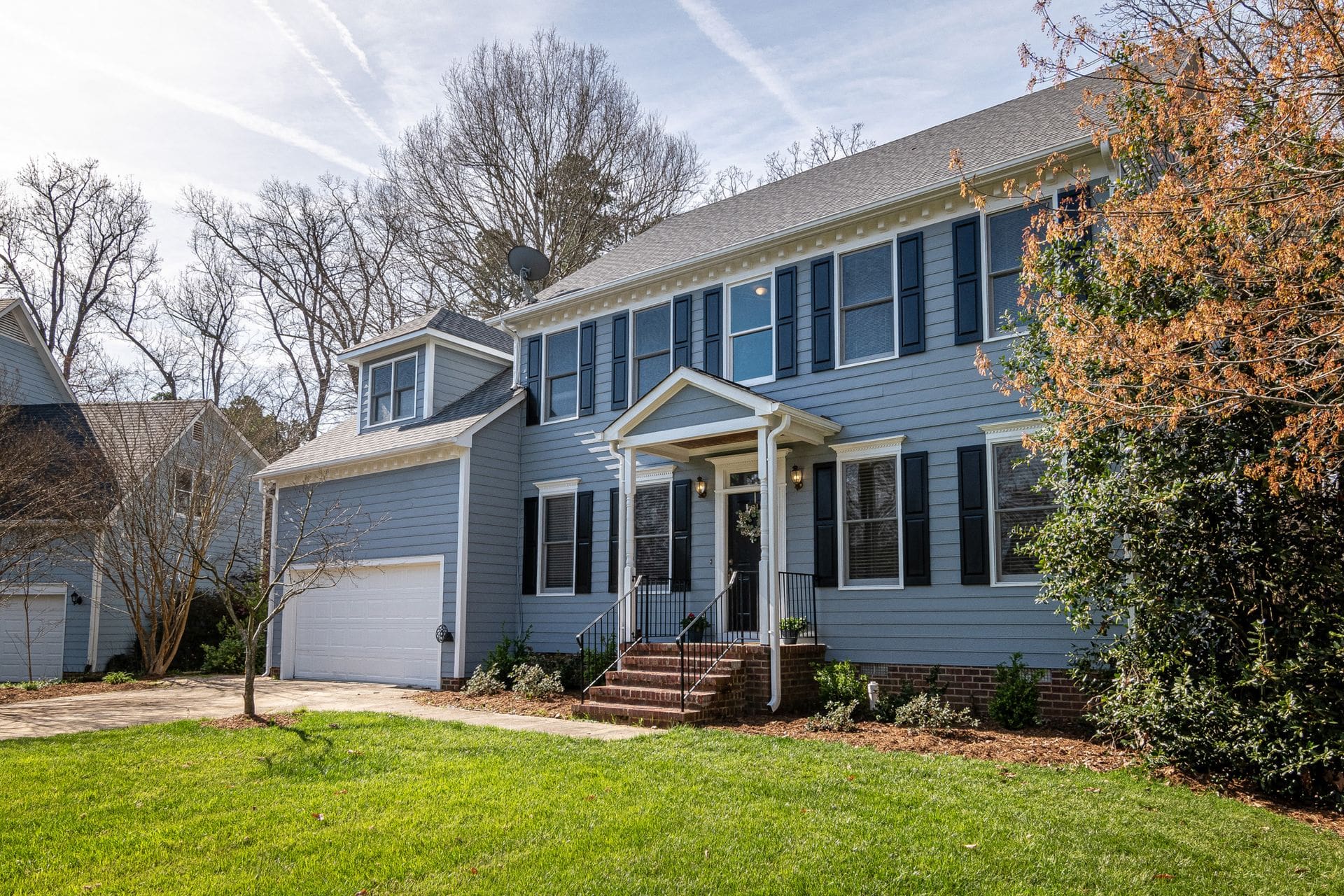
Photo by Curtis Adams on Pexels
What Is an HO-3 Policy?
An HO-3 policy, also called a special form policy, covers your home against all perils except those specifically excluded. It’s the standard policy most homeowners carry. The NAIC reports that HO-3 policies made up roughly 79% of owner-occupied homeowners policies in its most recent national data.
Here’s the structure that makes an HO-3 an HO-3:
- Your dwelling and other structures are covered on an open-perils basis. If the cause of damage isn’t listed as an exclusion, it’s covered.
- Your personal property is covered on a named-perils basis. Your belongings are only covered against the perils listed in the policy, typically 16 of them.
Open Perils vs Named Perils
Open-perils coverage protects against everything except the exclusions. Named-perils coverage protects against only the causes listed. The practical difference shows up at claim time: with open perils, the insurer has to point to an exclusion to deny the claim. With named perils, you have to show the damage came from a listed cause.
What an HO-3 Excludes
Common HO-3 exclusions include flood, earthquake, wear and tear, mold, pest damage, and intentional acts. The Massachusetts Division of Insurance describes the HO-3 as the most popular homeowners form precisely because it covers all perils unless specifically excluded, with earthquake and flood as the common carve-outs.
What Is an HO-2 Policy?
An HO-2 policy, also called a broad form policy, covers both your dwelling and your personal property on a named-perils basis. Everything in the policy, structure included, is protected only against the 16 listed perils. Massachusetts insurers commonly offer both forms; the state’s Division of Insurance notes that HO-2 and HO-3 are the standard homeowners forms sold here.
HO-2 vs HO-3: The Difference
The difference between an HO-2 and an HO-3 comes down to how your dwelling is covered. An HO-2 covers the structure against named perils only. An HO-3 covers the structure against everything except the exclusions. Personal property works the same way under both: named perils.
An HO-2 usually costs a bit less, but the tradeoff is real. If your roof is damaged by something that isn’t on the list, an HO-2 won’t respond. For most homeowners, the broader dwelling protection of an HO-3 is worth the difference.
What Does Medical Payments Cover?
Medical payments coverage, Coverage F, pays medical bills for guests injured on your property regardless of who’s at fault. A friend trips on your steps, a neighbor’s kid gets hurt in your yard, a delivery driver slips on your walkway. This coverage handles the urgent care visit without anyone needing to prove negligence or file a lawsuit.
Typical limits run $1,000 to $5,000, and it does not cover your own family members or your pets. Because the coverage is inexpensive, choosing a higher limit rarely moves your premium much.
How It Differs From Liability
Medical payments coverage applies without fault; liability coverage requires it. Coverage F handles small injuries quickly and quietly. Coverage E kicks in when you’re legally responsible and the stakes are higher, and it brings legal defense with it. Think of medical payments as the goodwill coverage that often keeps small incidents from turning into liability claims.
The 16 Named Perils
These are the causes of loss that named-perils coverage typically protects against:
- Fire or lightning
- Windstorm or hail
- Explosion
- Riot or civil commotion
- Damage by Aircraft
- Damage by Vehicles
- Smoke
- Vandalism or malicious mischief
- Theft
- Falling objects
- Weight of ice, snow, or sleet
- Accidental discharge or overflow of water or steam
- Sudden and accidental tearing apart, cracking, burning, or bulging of household systems
- Freezing of plumbing, heating, or air conditioning
- Sudden and accidental damage from artificially generated electrical current
- Volcanic eruption
Here’s the simple version. An HO-2 only pays when the damage comes from something on this list. An HO-3 uses the list just for your belongings. Your house is covered against nearly everything else too, unless the policy specifically excludes it.
What Is Not Covered?
A standard homeowners policy will not pay for damage caused by flood, earthquake, or routine wear and tear. Other common exclusions include mold, termites and other pests, damage from neglect, and intentional damage. Maintenance problems are considered the homeowner’s responsibility, not an insurable event.
Why Flood Needs Its Own Policy
Flood insurance is a separate policy, most often purchased through the National Flood Insurance Program. Most homeowners insurance does not cover flood damage, and that includes storm surge from a nor’easter or hurricane. NFIP policies cover up to $250,000 for your home’s structure and up to $100,000 for contents, and there’s typically a 30-day waiting period before coverage takes effect. If you’re near the water in Southeastern Massachusetts, that waiting period is a good reason not to wait for a storm in the forecast. You can learn more about flood coverage options alongside your homeowners policy.

Photo by James Anthony on Pexels
How Endorsements Change Coverage
Endorsements modify your policy to cover what the base form leaves out. This is where “what does homeowners insurance cover” becomes a personal question instead of a general one. The same HO-3 can look very different once it’s built for your home.
Common Endorsements to Know
- Water and sewer backup. The standard policy excludes backup from drains and sump pumps. This endorsement adds it, and it’s one of the most commonly used coverages in older homes.
- Scheduled personal property. Insures specific high-value items like jewelry or art at appraised value, often with no deductible.
- Replacement cost on contents. Upgrades your personal property from actual cash value (which subtracts depreciation) to full replacement cost.
- Extended replacement cost. Adds a cushion above your dwelling limit, generally 20 to 25%, in case rebuilding costs more than expected after a widespread disaster.
- Ordinance or law. Pays the added cost of rebuilding to current building codes, which matters in a region with plenty of older housing stock.
- Service line and equipment breakdown. Covers underground line repairs and mechanical failures the base policy skips.
None of these are automatic. Each one is a decision you make when the policy is written, which is why an annual review with your agent matters more than the fine print you skimmed at closing.
Coverage on the SouthCoast
Coastal Massachusetts adds a few wrinkles of its own. Most coastal policyholders in the state carry a mandatory wind deductible, which can run as high as 5% of your dwelling coverage, and the Massachusetts Division of Insurance reports the largest wind deductibles fall in coastal areas including Bristol and Plymouth counties. Homeowners who can’t find coverage in the standard market can turn to the MA FAIR Plan, the state’s insurer of last resort.
For a full picture of how wind deductibles, coastal underwriting, and Massachusetts pricing work, see our guide to homeowners insurance in Massachusetts.
Talk to a Local Agent
The policy form sets the frame. The endorsements fill in the picture. The right combination depends on your home’s age, its distance from the water, and what you’d actually need to recover after a loss.
Tetrault Insurance Agency has helped SouthCoast homeowners build the right coverage since 1980. As an independent agency, we compare options across multiple carriers instead of fitting you into one company’s form. Request a home insurance quote or call the office and we’ll walk through your policy together.